
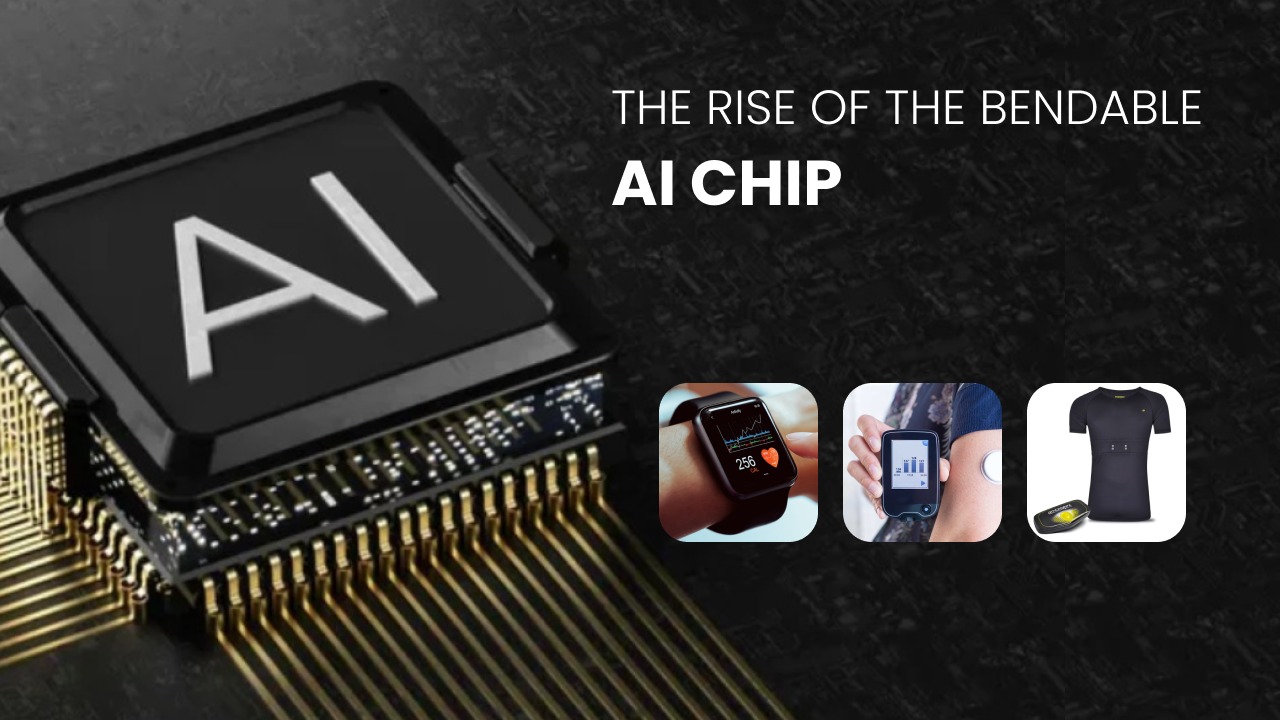
In a landmark scientific achievement that could transform the future of wearable tech, researchers have developed a bendable artificial intelligence chip capable of performing real-time computing even while flexed or curved a radical departure from traditional rigid silicon chips.
This cutting-edge innovation, highlighted in Nature, uses flexible thin-film transistors that maintain full AI processing capability despite mechanical stress. That means wearable devices such as smart watches, health patches and next-gen smart clothing could soon think for themselves, analysing data directly on the body without needing to offload to a smartphone or remote server.
Unlike conventional wearables that rely on relatively bulky rigid chips, this bendable design dramatically cuts energy consumption and opens the door to ultra-thin, comfortable, and highly adaptive devices. Researchers say this could usher in a new class of electronics that cling to the body like second skin from health monitors that track vital signs in real time to wearable AI assistants embedded in clothing.
Importantly, early tests show these flexible chips can perform key neural-network tasks including motion pattern recognition and vital-sign analysis without losing performance when bent or twisted. This breakthrough could significantly reduce battery drain and enhance data privacy by processing sensitive information locally on the device itself.
Industry insiders warn that this could be as game-changing for wearables as smartphones were for mobile computing. As flexible AI chips move toward commercial readiness, tech companies and health innovators are already jockeying to integrate this technology into next-generation wearable ecosystems.
The age of flex-AI computing may finally be here and it’s set to reshape how we interact with the technology we wear.