AI is becoming exceptional at completing tasks. But when it comes to leading, persuading, mentoring and building trust, people still have the advantage.
A team asked AI to help improve productivity.
Within minutes, it recommended reallocating work, reducing meetings and assigning responsibilities differently.
On paper, the plan was perfect.
In reality, it created confusion and sparked conflicts that never existed before.
AI can automate only 31% of leadership tasks, leaving nearly 70% dependent on human judgment and influence.
Nearly 4 million job postings still demand teamwork and collaboration skills.
Around 2.8 million vacancies require strong negotiation capabilities.
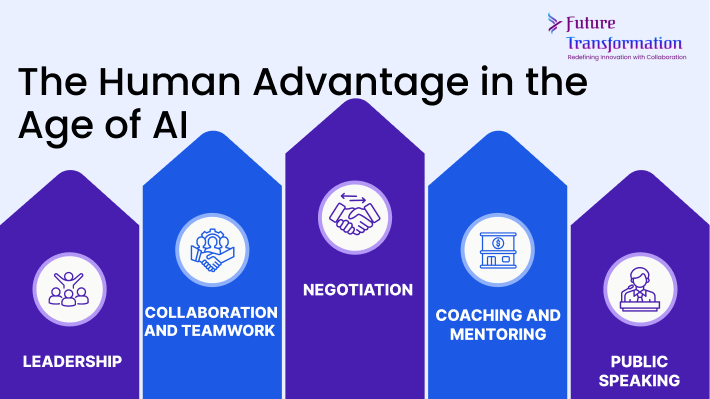
5 Workplace Skills AI Can’t Replace
1. Leadership
• Inspire teams through uncertainty and constant change.
• Make ethical decisions beyond data and algorithms.
2. Teamwork & Collaboration
• Build trust across diverse teams and perspectives.
• Resolve conflicts with empathy and understanding.
3. Negotiation
• Understand emotions behind every important conversation.
• Create outcomes benefiting everyone involved fairly.
4. Coaching & Mentoring
• Unlock people’s strengths through personalized guidance.
• Encourage confidence, growth and continuous learning.
5. Public Speaking
• Connect emotionally with every audience authentically.
• Inspire action through compelling stories and presence.
Recommendations
• Develop emotional intelligence alongside AI skills to create lasting professional value.
• Let AI handle routine tasks while you focus on people and strategy.
• Build strong relationships through empathy, collaboration, and effective communication every day.
• Keep learning new technologies without neglecting essential human-centered workplace skills.
• Lead with trust and adaptability in every professional decision.
AI will continue changing how we work. Human connection will continue defining why we work.
While AI can generate answers, it still can’t replace trust, empathy, influence or authentic leadership.
As AI reshapes industries, human skills will remain the foundation of resilient organizations.